Vikram Mills Launches Structured Rewards Program to Build Long-Term Atta Consumer Loyalty
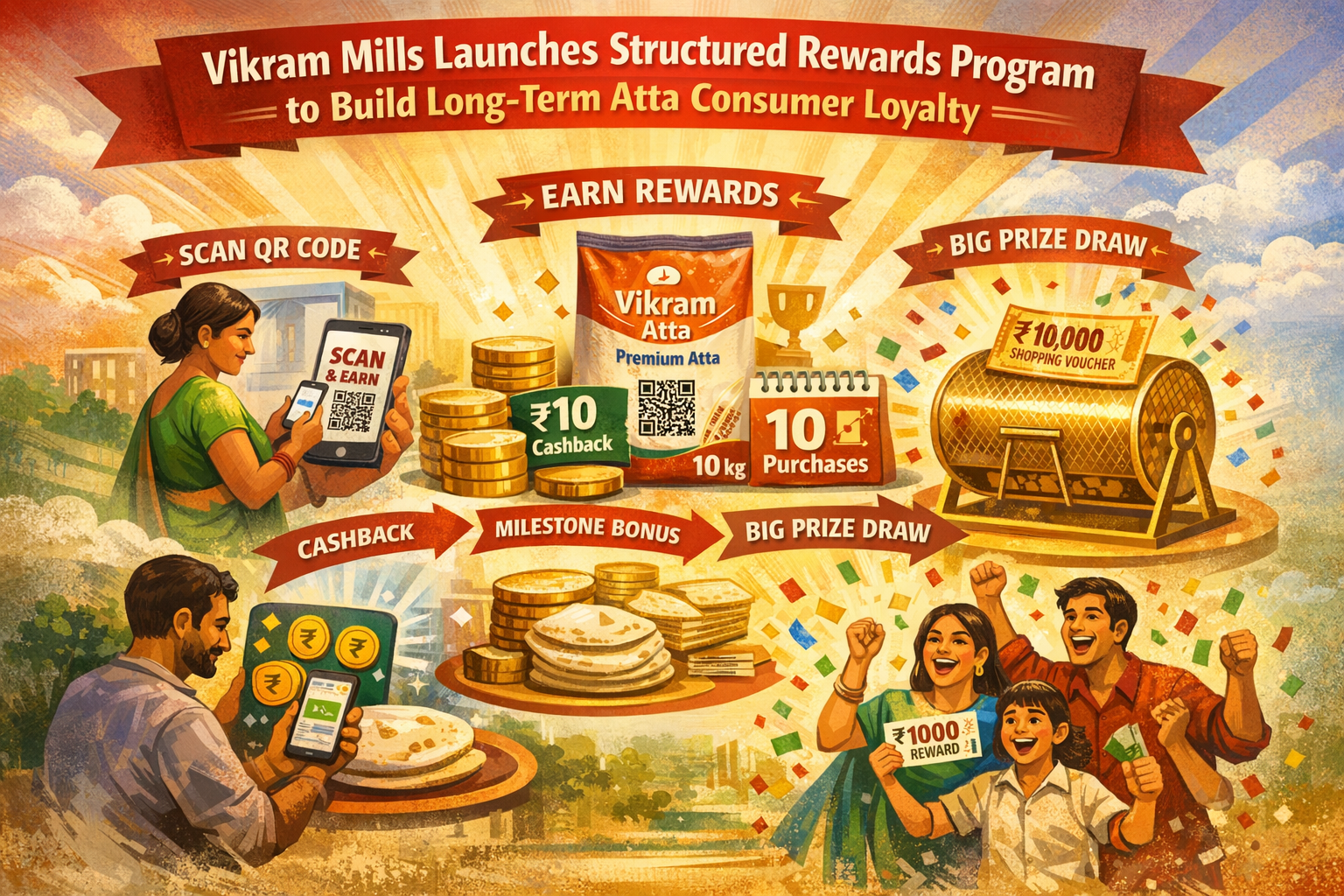
Vikram Mills, the flour milling brand with an established presence in Indian households, has introduced a structured customer loyalty program tied to its 5 kg and 10 kg premium Atta packs. The initiative moves beyond conventional discount-based promotions by combining per-purchase cash benefits, milestone bonuses, and a monthly prize draw — a relatively uncommon model in the staples category. For consumers who buy Atta on a weekly or fortnightly basis, the program offers a cumulative value proposition that grows with regular use.
How the Program Works
Participation begins with a QR code printed on specially marked packs. Customers scan the code, register their mobile number, and begin tracking purchases and rewards through a digital interface. The earning structure is straightforward:
- Everyday savings: ₹5 credited on each 5 kg pack purchase; ₹10 on each 10 kg pack purchase.
- Milestone bonus: After every 10 purchases, an additional ₹50 is awarded for the 5 kg pack and ₹100 for the 10 kg pack.
- Monthly jackpot draw: All registered participants enter a monthly lucky draw, with one winner receiving a ₹10,000 shopping voucher.
The design rewards frequency rather than volume alone. A household consistently buying one 10 kg pack per week would accumulate ₹520 in base rewards over a year, before milestone bonuses — a modest but tangible return on a daily staple purchase that would have happened regardless of the program. The milestone structure adds a retention incentive: customers who stay within the program across ten consecutive purchases receive a proportionally higher reward on that tenth purchase, effectively raising the average benefit per transaction for loyal participants.
The Strategic Rationale Behind Loyalty in Staples
The staples segment — which includes wheat flour, rice, pulses, and cooking oils — has historically been one of the most price-sensitive and brand-fluid categories in Indian retail. Consumers in this segment often switch between brands based on availability, proximity, or a marginal difference in price. Loyalty programs in fast-moving consumer goods are well-established in categories such as personal care, beverages, and packaged snacks, but their adoption in commodity staples has been slower, partly because of the operational complexity of tracking purchases across kirana stores, supermarkets, and digital platforms.
Vikram Mills' decision to build a mobile-based rewards system around a QR code on the pack addresses this challenge directly. It enables tracking without requiring retailer-side infrastructure, and it creates a direct digital relationship between the brand and the end consumer — a connection that branded Atta producers have traditionally lacked, given that most sales flow through intermediaries. Mr. Shubham Garg, Director of Vikram Roller Flour Mills Limited, framed the initiative as a long-term engagement commitment: "We see this as a long-term engagement initiative rather than a short-term offer."
Consumer Value in the Context of Daily Household Spending
Wheat flour is among the most regularly purchased food items in Indian households, making it a logical anchor for a loyalty program that depends on purchase frequency. The economics of the program are built around this rhythm — not on one-time or seasonal buying behaviour, but on the predictable cadence of a household staple that replenishes itself every few days or weeks depending on family size.
The monthly jackpot draw adds an element of participation that extends beyond transactional calculation. While the cash-back components appeal to value-conscious buyers focused on measurable returns, the draw creates a reason to stay registered and engaged even in months when the milestone threshold has not yet been reached. Together, the two mechanisms serve different motivational profiles within the same consumer base.
Vikram Mills Atta is available across supermarkets, local kirana stores, and online delivery platforms, giving the program broad accessibility across urban and semi-urban retail environments. For a category where distribution reach and product consistency are the primary drivers of repeat purchase, the addition of a structured rewards layer signals a deliberate effort to convert habitual buyers into identified, engaged consumers — a distinction that carries long-term value for any brand operating in the increasingly competitive branded staples market.