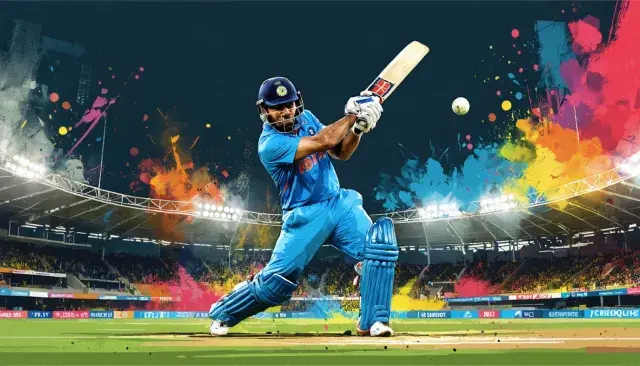
Vaibhav Sooryavanshi Shuts Down AI Bat Claim With Sharp Wit
A Pakistani cricket pundit's claim that 14-year-old Vaibhav Sooryavanshi uses a bat embedded with an artificial intelligence chip drew widespread ridicule this week - and the young star's own response, captured on video by the Rajasthan Royals' official account, turned an absurd allegation into a moment of genuine charm. After powering his side to a commanding chase against Punjab Kings with 43 runs off 16 deliveries, Sooryavanshi addressed the claim directly and without hesitation. His answer was brief, confident, and quietly devastating to the person who made it.
The Allegation That Should Not Have Been Made
Nauman Niaz, a Pakistani broadcasting figure, made the claim a day before the Punjab Kings fixture. His assertion: that Sooryavanshi's bat contains an AI chip responsible for his extraordinary hitting ability. The claim was not accompanied by any technical explanation, evidence, or credible sourcing - because none exists. There is no commercially available or experimentally validated technology that embeds artificial intelligence processing into a cricket bat to influence a batter's output in real time. The physical constraints alone make this impossible: a bat must conform to strict dimensional and material regulations, and no chip-based system could interface with human muscle mechanics at the speed required during a delivery.
What Niaz described does not exist in any laboratory, let alone a professional dressing room. The allegation belongs to the category of claims that spread not because they are plausible, but because they offer a tidy explanation for something that feels inexplicable - a teenager hitting with the authority of a seasoned professional.
Why Prodigious Talent Attracts Conspiracy
Sooryavanshi's performances have been difficult to contextualise in conventional terms. He began playing at an elite franchise level at an age when most young cricketers are still in junior development pathways. When a performer operates well outside the statistical and experiential norms of their peer group, observers - particularly those who are invested in a rival narrative - sometimes reach for external explanations rather than accept the simpler one: raw, exceptional ability developed through intensive early specialisation and coaching.
This pattern is not unique to cricket. Across disciplines, from music to mathematics to performance sport, prodigies consistently attract speculation about unfair advantage, covert assistance, or technological intervention. The speculation says more about the discomfort of onlookers than about the subject. Extraordinary performance, especially in the young, disrupts the assumption that achievement must be proportional to age and accumulated experience.
The Response That Said Everything
Rajasthan Royals posted a short video in which a member of the franchise's content team asked Sooryavanshi directly whether his bat contained an AI chip. His reply was immediate: God himself, he said, had promised to put something special in his bat. The answer was delivered with a lightness that made the original allegation look precisely as hollow as it was. He did not offer anger, defensiveness, or a technical rebuttal. He offered perspective - and in doing so, demonstrated a composure that many adults in public life struggle to maintain when confronted with baseless criticism.
The Rajasthan Royals' decision to post the exchange publicly was itself a communication choice worth noting. Rather than issue a formal denial or ignore the claim, the franchise let the young talent speak for himself in an unfiltered format, allowing the absurdity of the original allegation to settle naturally in the audience's mind.
What This Moment Reveals About Public Discourse Around Young Excellence
The episode illustrates a broader tension in how public figures - particularly young ones - are received when they perform at levels that outpace expectation. Accusations of technological or pharmacological enhancement are not new. What is relatively new is the speed at which such claims circulate across social platforms and the degree to which they require a response at all. Sooryavanshi handled it well. The more meaningful question is why established broadcast voices with institutional credibility feel licensed to make technically illiterate claims about a minor in public, and what responsibility platforms and editors bear when such content is amplified without scrutiny.
Nauman Niaz's claim was not commentary. It was not analysis. It was speculation dressed as insight, and it targeted a 14-year-old. The fact that the young man in question was composed enough to respond with humour rather than distress reflects well on him. It should also prompt a harder look at the standards applied to public criticism of young performers in high-visibility environments.