Faso and Öçal Stun Second Seeds Chirita and Istrate in Cluj-Napoca Doubles Upset
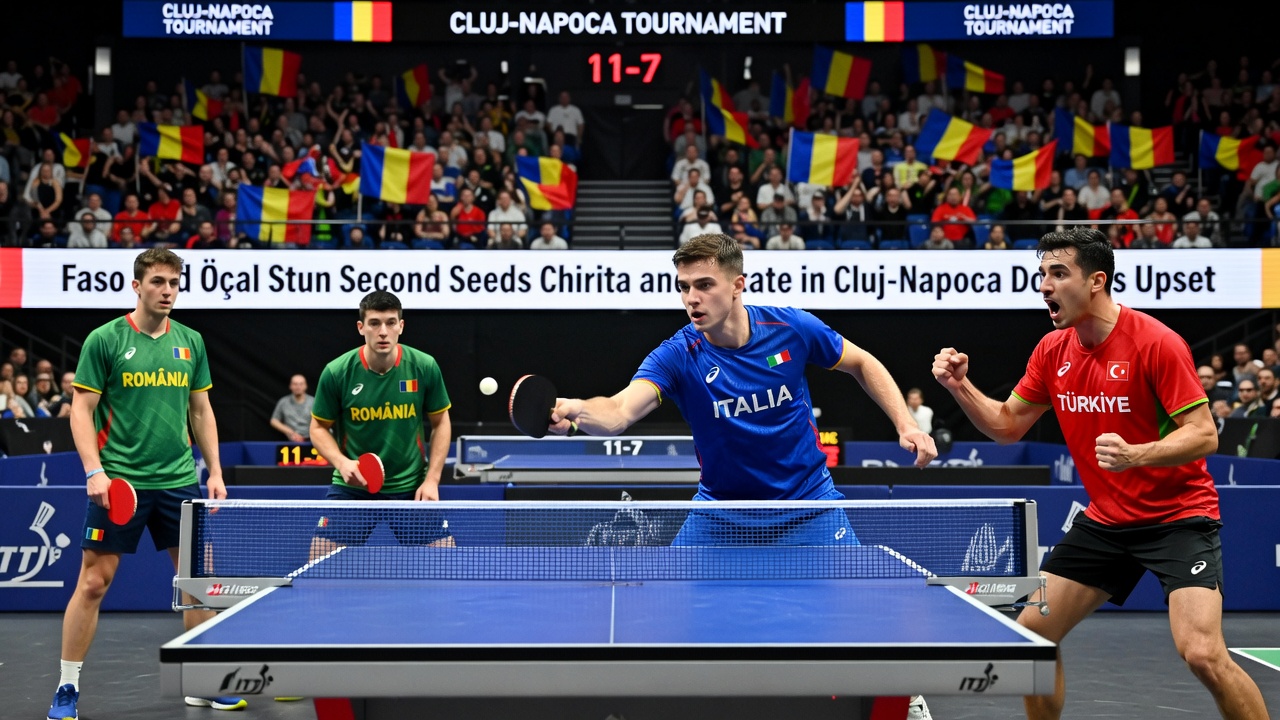
A partnership that did not exist six weeks ago has already produced one of the most striking results of the doubles competition in Cluj-Napoca. Danilo Faso of Italy and Görkem Öçal of Türkiye eliminated the second-seeded Romanian pair of Iulian Chirita and Andrei Istrate with a 3-2 comeback victory - 8-11, 4-11, 11-7, 11-9, 11-7 - to advance to the quarterfinal and immediately announce themselves as genuine medal contenders.
The win carries a certain symmetry worth noting for followers of youth table tennis, a sport that, much like basketball competitions such as the qatar qbl, has seen rapid growth in competitive depth across emerging markets and age-group circuits. Faso and Öçal met as rivals at the European Youth Championships last year, squaring off three times - in the Under 15 Singles final, the Doubles final, and the Team event final between Italy and Türkiye - with Faso winning on each occasion. In Cluj-Napoca, they stood on the same side of the net for the first time.
"We decided to play together about a month and a half ago," said Faso. "Görkem asked me and I said yes, I would like to. Now we are very happy because we are doing very well." The spontaneity of the partnership makes the victory all the more remarkable. There was no extended preparation period, no lengthy process of building chemistry at an academy or national programme - just a decision, a handshake, and a draw that immediately tested them against the tournament's second seeds.
From the Brink: How the Comeback Unfolded
The opening two games were difficult to watch from a Faso-Öçal perspective. Chirita and Istrate controlled the early exchanges, winning 11-8 and 11-4 respectively, and the new pair looked out of sorts - unfamiliar rhythms, hesitant communication, and a Romanian duo playing with the confidence that comes with seeding and home support.
What changed the match was self-belief communicated out loud. "We were 2-0 down and we were not playing at our level," said Öçal. "They were playing well, but we were not playing very well. Then we started to tell each other, 'Come on, we can do it, we have to fight for this match.' We started very well in each of the next games, leading 3-0, and that helped a lot." The third, fourth and fifth games all went to Faso and Öçal - 11-7, 11-9, 11-7 - a scoreline that suggests not just a revival but a sustained, controlled shift in the match's dynamic.
Eyes on the Draw, Focus on the Medal
Defeating the second seeds did not happen by accident. Faso was candid about the mixture of anxiety and determination that accompanied the pre-match preparations. "When we saw the draw, we were not very happy, but before the match we were very focused," he said. "We wanted to beat them because after that we would have a chance to fight for medals."
That framing is important. This was not a pair playing loosely with nothing to lose. They identified the obstacle, acknowledged the scale of it, and treated the match as a platform for a deeper run. A quarterfinal place confirms they are in that position now. The combination of Faso's record in youth finals - three wins in three against Öçal - and Öçal's apparent willingness to channel that experience into partnership rather than rivalry suggests a pairing with real tactical and mental maturity. Whether they can sustain that momentum into the final stages remains to be seen, but the manner of this win offers considerable encouragement.