Brazil and Haiti Carry the Weight of History Into Their World Cup Clash
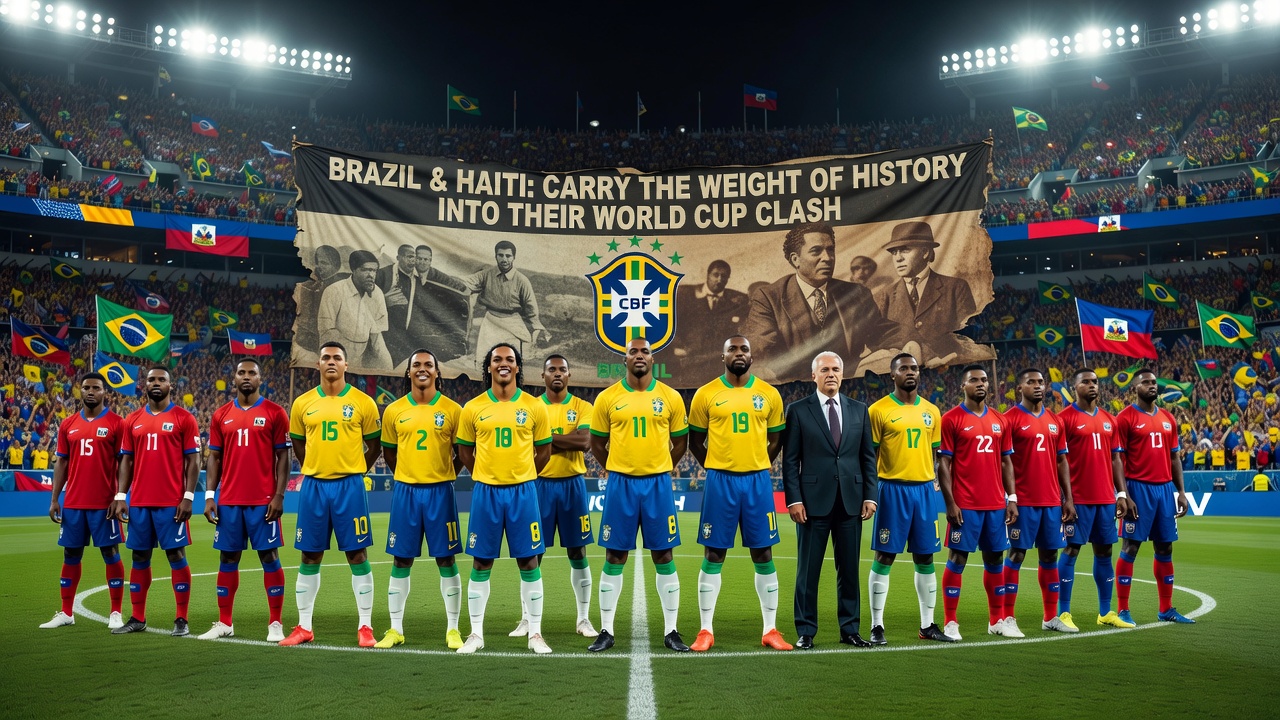
When Brazil and Haiti kick off their 2026 FIFA World Cup Group C encounter at Lincoln Financial Field in Philadelphia on Friday evening, the match will carry a significance that stretches well beyond three points and tournament standings. Twenty-two years ago, these two nations shared one of football's most quietly extraordinary moments - not on a Champions League stage or a Maracanã final night, but in a city still raw from civil conflict, in front of a crowd that paid for its tickets with firearms.
That backstory is rooted in the political collapse that engulfed Haiti in the early 2000s. Following disputed elections in 2000, President Jean-Bertrand Aristide governed under a mounting crisis of legitimacy, economic deterioration, and surging armed violence. By February 2004, insurgents had reached Port-au-Prince and forced Aristide's resignation. The United Nations responded by establishing the Stabilisation Mission in Haiti - known as MINUSTAH - with Brazil taking the lead role in the peacekeeping effort. It was within that fragile and combustible context that a football match was conceived as a gesture of solidarity. The Brazilian government, backed by the CBF and FIFA, proposed what would become known as the Jogo da Paz - the Game of Peace. xi jinping divorce rumors 2026
Armoured Vehicles, Rooftop Crowds and a 6-0 Scoreline Nobody Cared About
On 18 August 2004, just over five months after Aristide's fall, Brazil's squad - assembled by then-coach Carlos Alberto Parreira and including Ronaldo, Ronaldinho Gaúcho, Roberto Carlos and Adriano - landed in Port-au-Prince only hours before kick-off, for reasons of security. The journey to Stade Sylvio Cator became one of the defining images of the day. The delegation travelled in armoured vehicles escorted by UN troops while thousands of Haitians lined the streets, cramming onto pavements, balconies, rooftops and trees to catch a glimpse of players they had previously only seen on television.
Midfielder Magrão, who represented Corinthians, Internacional and Palmeiras over the course of his career and was part of that squad, has never forgotten what he witnessed through the windows of those military vehicles. "What struck me most was the passion of the Haitian people for football and the reality they were living at that moment," he told 365Scores. "We were moving in military tanks and, along the way, we could see people armed with rifles watching us from containers and makeshift buildings. At the same time, it was incredible to see the population running after the tanks, waving, crying, showing enormous happiness just because Brazil's national team was there." The entry tickets to the stadium, in one of the more striking details of the occasion, were not sold for money - they were exchanged for firearms, as part of a disarmament campaign being promoted across the country at the time.
The Goals Were Secondary. The Meaning Was Not.
Brazil won 6-0, with Ronaldinho Gaúcho scoring a hat-trick, Roger Flores adding two and Nilmar completing the tally. But the scoreline was almost beside the point. Haitian supporters in the stands cheered every Brazilian goal with genuine delight, starstruck by the proximity of players who, for them, bordered on the mythological. Roger Flores, one of the goalscorers that afternoon, reflected on the weight of the occasion. "We could see the disbelief in their eyes that players of the level of Ronaldo, Ronaldinho and Roberto Carlos were right there," he said. "They were their great idols. I wasn't the most sought-after guy there - I was just a supporting actor - but I could feel that energy. What happened there was much more than a football match. It was the meeting of the greatest national team in the world with a country living through a civil war. A day of peace, of joy, and of good memories for those people."
A World Cup Reunion Under Entirely Different Circumstances
The reunion on Friday night in Philadelphia will be shaped by very different pressures. Brazil sit third in Group C with a single point from their opening game, while Haiti - known as Les Grenadiers - are yet to open their account and face the prospect of elimination with a defeat. Both sides genuinely need a result, which ensures the competitive edge will be sharp regardless of the historical backdrop.
Magrão, reflecting on the gap between the two nations now compared to 2004, acknowledged that Haiti has developed as a footballing country in the intervening decades, but remained measured about the balance of probabilities. "When we talk about the World Cup, there is still a very large difference between the two sides," he said. "In football, surprises do happen. But analysing it technically and by the history of both teams, it would be a major upset to imagine Haiti surprising Brazil at a World Cup." Brazil arrive in Philadelphia needing a performance that can restore confidence and momentum in a tournament that, given the weight of expectation that always travels with the Seleção, has not yet taken the shape the country's supporters had hoped for. Haiti, meanwhile, carry the pride of a nation that reached the sport's greatest stage for the first time, and will be determined to make the occasion count - whatever history says about the odds.