Paytm Crosses a Milestone as Domestic Investors Claim Majority Ownership
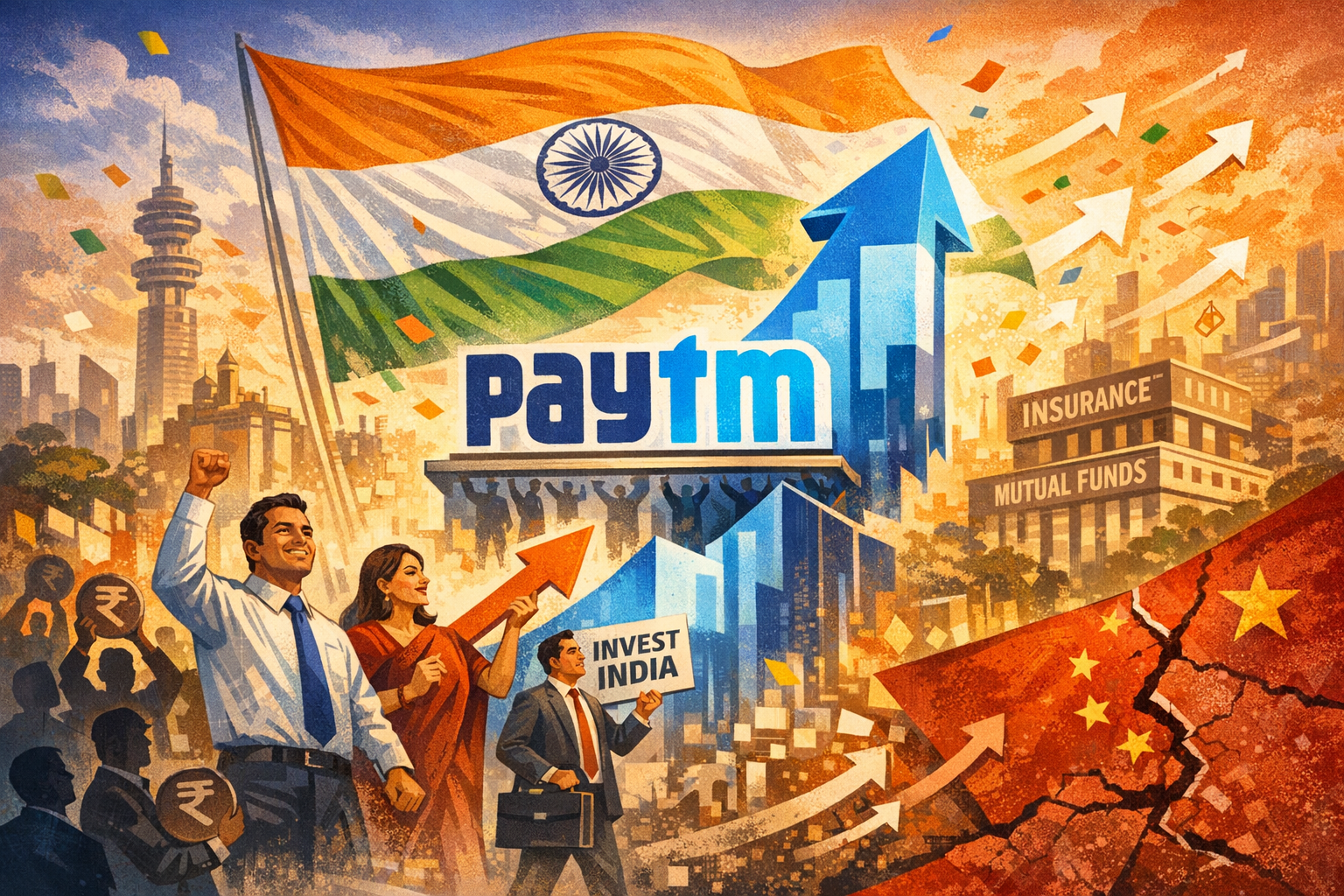
For the first time since its founding, One 97 Communications — the parent company behind the Paytm brand — is majority-owned by Indian investors. Domestic shareholders held a combined 50.3% stake as of the end of March 2026, a threshold that carries both symbolic and structural significance for a company that once counted Chinese and foreign institutional investors among its largest backers. The shift reflects a sustained reallocation of holdings over several quarters, driven by rising confidence from mutual funds, insurance firms, and other domestic institutions.
How Domestic Ownership Built to a Majority
The climb to 50.3% did not happen overnight. Domestic institutional investors reached a record 23.1% stake in the March quarter, rising 2.8 percentage points from the prior quarter and 9.1 percentage points compared to the same period a year earlier. Mutual funds were the primary driver, with their combined holding reaching 16.6%, up from 14.3% in the December quarter. The number of mutual funds invested in the company grew from 36 to 41 over that period, with Motilal Oswal Mutual Fund, Mirae Asset, and Bandhan Mutual Fund among those expanding positions.
Insurance companies also added to their exposure, pushing the sector's combined stake to 5.1% from approximately 4.8%. Tata AIA Life Insurance and SBI Life Insurance were among the firms increasing their positions. The pattern is consistent with what domestic institutional investors typically do when a company demonstrates improving operational discipline: they accumulate gradually, front-running a broader re-rating.
Operating Performance Gave Investors a Reason to Buy
The ownership shift did not occur in isolation — it followed a meaningful improvement in Paytm's financial position. The company reported its third consecutive profitable quarter in the December quarter, posting a net profit of Rs 225 crore. Revenue rose 20% year-on-year to Rs 2,194 crore, and EBITDA stood at Rs 156 crore, reflecting a margin of 7%. For a fintech company that spent years absorbing losses while building infrastructure and user base, three consecutive profitable quarters signal a structural change in the business model, not merely a one-time improvement.
The merchant side of the business has also expanded materially. Subscription merchants crossed 1.44 crore, a 24% increase year-on-year, indicating that Paytm's monetisation of its merchant network is deepening. This is relevant because merchant payments carry different — and often more predictable — revenue characteristics than consumer-side transactions, which can be more volatile.
Brokerages Highlight a Monetisation Advantage
Analyst coverage has grown more constructive. Bank of America upgraded the stock with a target price of Rs 1,380, citing stronger monetisation in merchant payments and lending, and described Paytm as "strong in B2B" and "ahead in its monetisation journey with a more diversified business mix and better margins." Bernstein noted that Paytm's merchant revenues are roughly twice that of its nearest competitor despite comparable payment volumes — a gap that points to pricing power and deeper product integration rather than volume alone.
These assessments matter because they inform institutional allocation decisions. When credible brokerages frame a company's advantage in structural terms — diversified revenue, stronger margins, deeper merchant relationships — it reduces the perceived risk for long-only domestic funds that operate under strict mandates. The alignment between analyst conviction and domestic institutional buying is visible in the shareholding data.
What the Ownership Shift Means Beyond the Numbers
The crossing of the 50% domestic ownership threshold has implications beyond the balance sheet. India's fintech regulatory environment has increasingly emphasised domestic control and data localisation, and a company with majority Indian ownership is better positioned to navigate that landscape. For Paytm specifically, the ownership trajectory also marks a reversal from an earlier period when foreign shareholding — particularly from Alibaba-affiliated entities — attracted scrutiny amid broader concerns about cross-border data flows and foreign influence in financial infrastructure.
The transition to majority domestic ownership does not resolve all of Paytm's outstanding challenges. The company continues to rebuild its lending business following regulatory restrictions imposed in early 2024 on its associated payments bank, and margins at 7% remain modest relative to more mature financial services firms. But the combination of profitability, expanding merchant reach, and a domestic investor base with rising conviction suggests the company has moved past its most turbulent phase. Whether it can sustain that momentum — and translate merchant volume leadership into durable earnings growth — will determine how significant this ownership milestone ultimately proves to be.