Mourinho Abandons Portugal Agreement to Return as Real Madrid Manager
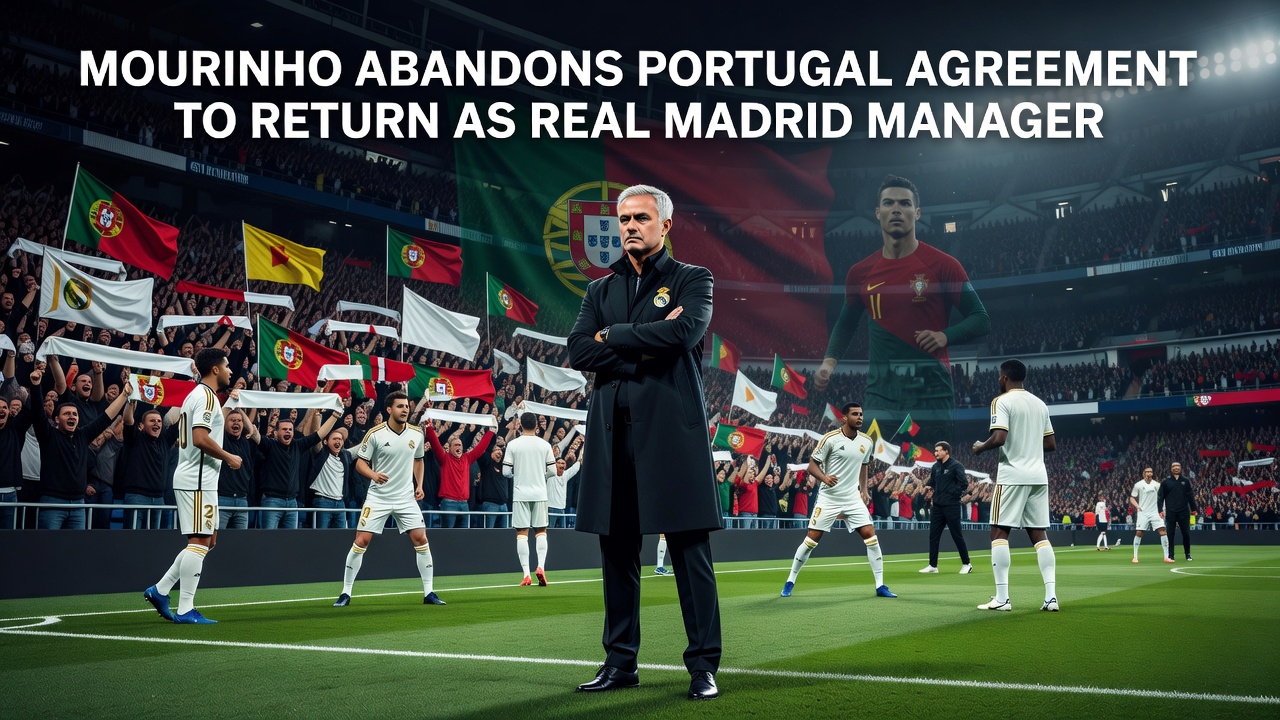
Jose Mourinho is heading back to the Santiago Bernabeu, but his return to Real Madrid has come at a significant cost to Portuguese football. Confirmed as the club's new head coach on 11 June - replacing Alvaro Arbeloa in the dugout - the 63-year-old walked away from a verbally agreed four-year deal to take charge of his own national team, a role that would have seen him lead Portugal through to the 2030 World Cup on home soil.
According to a report from Sky Sports, the agreement with the Portuguese Football Federation was in place and Mourinho had been lined up to guide the Seleção into a tournament that, with co-hosts Spain and Portugal both staging matches alongside Morocco, would have carried enormous symbolic weight for the man himself. The pull of Real Madrid, however, proved stronger than any sense of national duty. It is worth noting that the scale of interest Mourinho's movements generate cuts across multiple sports and markets - much like the crossover audiences who follow everything from international football to water polo betting sites - a measure of how global his brand of management has become. Mourinho previously left the Bernabeu in 2013 after three seasons that delivered a La Liga title, a Copa del Rey, and a relentless but ultimately unsuccessful pursuit of Champions League glory against Pep Guardiola's Barcelona. water polo betting sites
The timing of the announcement threw the landscape of Portuguese football into sharp relief. Roberto Martinez, whose contract expires at the conclusion of the current World Cup, had already been managing speculation about his future with the composure of a man who knew his successor had been identified. "My contract ends after the World Cup - I think that's not news, it's a fact," the former Belgium coach stated plainly when pressed on exit rumours that intensified in the final days before Mourinho's Real Madrid appointment was made public. Martinez acknowledged he had discussed the situation extensively within Portugal, framing his departure as a settled matter rather than breaking news.
Martinez Closes the Chapter, Portugal Must Plan Again
Whatever Mourinho's ultimate destination, the effect on Portugal's post-World Cup planning is immediate. The federation believed it had secured one of the most experienced coaches in world football - a man with deep roots inside the Portuguese national identity - to lead a squad that remains competitive at the highest level. That certainty has now dissolved. With Martinez confirming his exit and Mourinho unavailable, the federation faces the task of rebuilding its managerial structure from scratch once the tournament concludes. Portugal arrive at this World Cup having won the UEFA Nations League, a significant achievement that reflects the quality Martinez has cultivated over three and a half years and 40 matches in charge.
Ronaldo's International Future Hangs in the Balance
The managerial uncertainty intersects directly with the most pressing individual question surrounding Portuguese football: what happens to Cristiano Ronaldo after this World Cup? The 41-year-old striker is preparing for what will be his sixth World Cup appearance, a milestone that speaks to extraordinary longevity at the top of the game. His form in recent friendly fixtures has drawn criticism, but Martinez has been unequivocal in his defence of the forward. "Within the national team, he's a vital player because he's the finisher, the area player, the player whose movements can create space for other players," Martinez said, adding that internally Ronaldo's commitment feels as intense as if it were his debut tournament.
The identity of whoever replaces Martinez will have a direct bearing on whether Ronaldo continues into a seventh World Cup campaign. Had Mourinho taken the Portugal role, the equation would have been straightforward - the two men built a formidable partnership during their time together at Real Madrid, and Mourinho's attachment to Ronaldo as a player is well documented. Now, with an unknown successor on the horizon, Ronaldo's willingness to continue into a new cycle and a new manager's willingness to centre the team around a 41-year-old are both open questions.
A Familiar Return, and the Weight of History at the Bernabeu
For Real Madrid, the appointment represents a calculated bet on experience and a familiar culture fit. Mourinho understands the institution, its demands, and its expectations. His first spell brought sustained domestic success and an identity built on defensive solidity and lethal transition football - qualities that have endured in his management philosophy regardless of the clubs he has passed through. Chelsea, Inter Milan, Manchester United, Tottenham, Roma, and Fenerbahçe have all featured in his managerial portfolio since 2013, giving him a breadth of experience that few coaches in the world can match.
What Portugal has lost, Real Madrid has gained. Whether the trade-off proves wise for the club, and how the Portuguese federation responds to the void left behind, will shape the direction of one of international football's most talented squads for the next four years.